She Bought Three AI Subscriptions to Save Her Agency. Her Best Writer Quit Anyway.
Elena Rodriguez was standing in the doorway of her corner office at Momentum Digital, watching her best writer pack a cardboard box.
Jessica had been there six years. She was the one who could turn a client's rambling voice memo into a polished whitepaper by morning.
Now she was folding her things into a box and not quite meeting Elena's eyes. "I just can't do it anymore," she said. "I'm writing first drafts until midnight and there's no end in sight."

By every outside measure, Elena was winning. A 150-person agency. Fast growth. New logos every quarter. But the machine that produced that growth was grinding down the people inside it, and Elena had seen the warning signs coming for months.
So she'd done what most sharp operators do. She went looking for a tool. Within a few weeks she had three AI subscriptions and a plan to let the software predict which clients were about to churn, so her team could get ahead of the fire drills.
The tool flagged her happiest, most engaged clients as high-risk. It missed the ones actually walking out the door.

Here's the part that took Elena a while to accept: the vendor's technology was fine. The problem was her data. Across 150 people, some account managers logged every call religiously and others updated the system once a month. The AI did exactly what it was built to do. It found patterns in a mess, and a mess was all it had to work with.
That's the moment most owners quietly give up and conclude AI just doesn't work for a business like theirs. Elena almost did too.
What changed things wasn't a better subscription. It was a different question. She'd been asking "which AI tool should I use?" The question that actually unlocked her agency was "what is the single biggest bottleneck I need to solve?" Answer that first, and the right tool becomes obvious. Skip it, and every tool is a gamble.

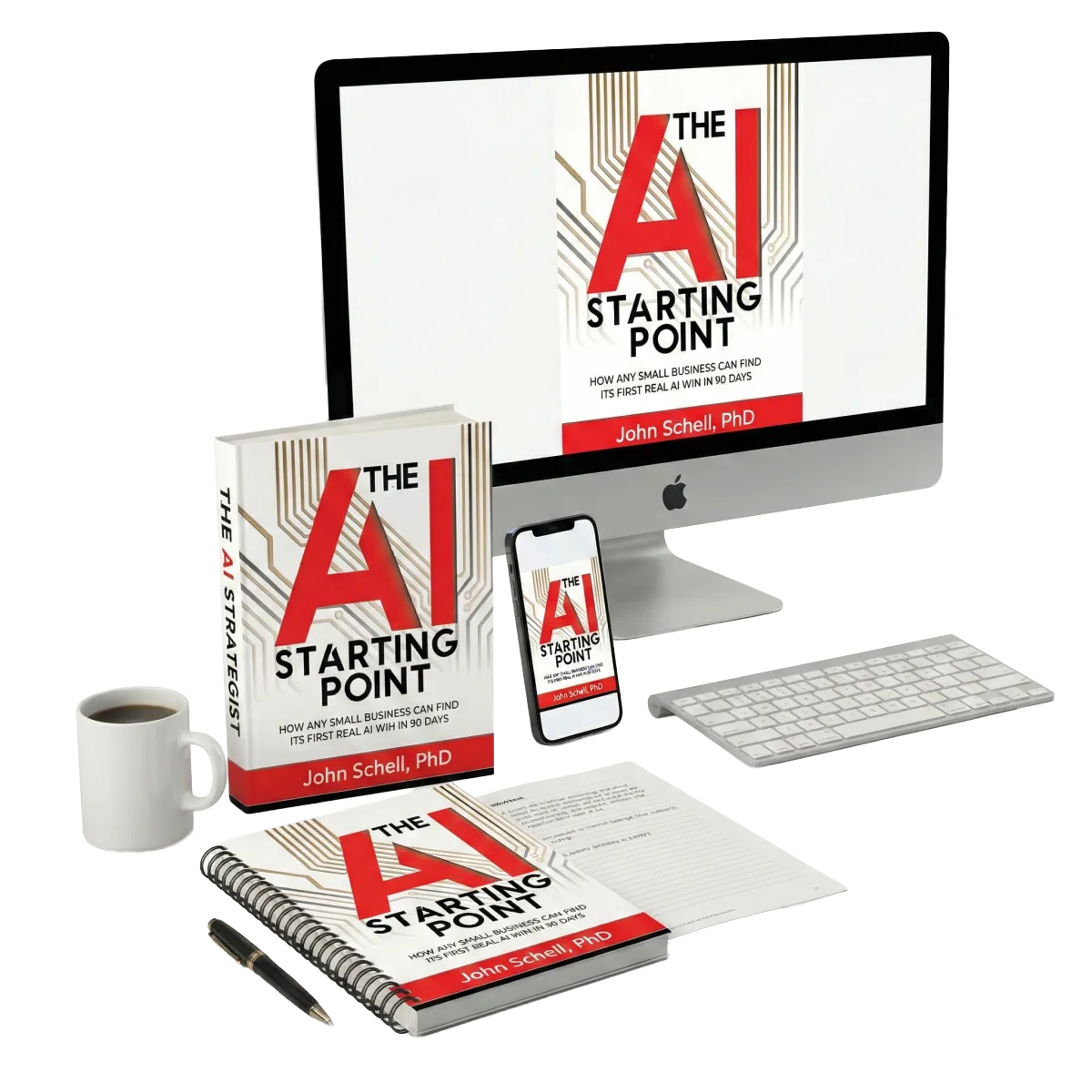
That reversal is the spine of The AI Starting Point by Dr. John Schell.
After more than twenty years inside technology at energy, biotech, and manufacturing companies, Schell watched the same failure repeat: leaders got excited about a technology, bought it, then went looking for a problem it could solve. The book flips the order.
It demystifies AI into five practical categories, then walks the reader through the exact framework Schell uses with clients to land on one validated opportunity, scored for impact, effort, and readiness, that can be explained in a single plain sentence.

Elena's skepticism was never the problem.
It was pointed at the wrong thing. Once she diagnosed the bottleneck before shopping for the cure, the same technology that had embarrassed her started earning its keep.
Read her full story, and Marcus's and Sarah's, in The AI Starting Point.